

Top 5 Successful Biotech Startups to Watch in 2021

Together with the rapid development of technology, more biotech startups appear every year. And, I was curious about which ones really are doing unique things. Moreover, one thing unites all the biotech companies trying to emerge: they’re seeking breakthroughs.

Furthermore, some of these companies attract media attention and secure generous financing for their innovations, while others vanish from the market, the simple fact is the US ones get more press. It’s also no coincidence that they have very good marketing and digital content strategy.

Top 5 successfull Biotech startups to watch in 2021

5 Pioneering Biotech Companies for 2021


1. Impact Vision

The startup ImpactVision specializes in developing what’s called “hyperspectral technology,” to help determine food quality. And, the company’s solution lets users simply take a picture of the food and see its condition and ingredients in a web app.

This technology could open huge avenues for real-time management of food quality in production and in on-the-shelf scenarios. The solutions can increase consumer safety and decrease food waste.

2. Samumed

Samumed seeks to learn how to manipulate these cells to prevent hair loss, as well as for the prevention of diseases of the bones, skin, and joints. And, this company has become one of the richest in the industry, but it’s also one of the least known. Its focus is on stem cells.

Not what you’d expect from a biotech pioneer, but in 2006, Kibar won the very first poker tournament he entered. Furthermore, Google company founder Osman Kibar and you’ll see photos of him playing poker.

In general, Samumed is trying to find a way to force the cells of ageing people to regenerate as quickly as the growing embryos do. Moreover, Kibar now focuses on the activities of Samumed, which, he says, creates medicines that can reverse the ageing process.

They actually stimulate hair growth, reduce pain, and improve joint mobility in arthritis. Furthermore, but it’s important to remember that 80% of the drugs at this stage of development never make it to market. Moreover, biotech investors are spooked by the scandalous Theranos incident that was fully exposed in 2018.

3. Proteus Digital Health

The company boasts over 450 patents and impressive management. It incorporates a system of sensors and apps to monitor health status and drug administration. And, once inside the body, the capsule sends signals to the web app, reporting ingestion and the patient’s activity.

Proteus is the world’s first health system to use digital chemotherapy drugs with ingestible sensors for tracking the drug’s absorption in the body. They are essentially a microchip in the shell, which could be susceptible to hacking.

4. Bulb

This startup is in the field of eco-technology and energy. It is the UK’s largest supplier of green energy. And, Co-founder Hayden Wood says: “I was trying to understand my own home energy bills and that led me to Bulb — with a mission to fix everything I saw broken with existing energy suppliers.”

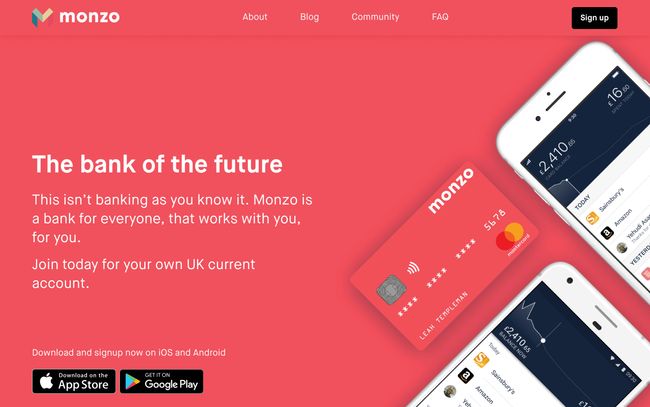
The company states this can reduce costs by 20%. It already has 300,000 customers and annual growth of 400%. The company hopes customers will continue a transition to Bulb’s services in the same way customers of large banks are moving to small startups like Monzo and Revolut.

The startup is even ready to pay a fee on the customers’ behalf for terminating their contracts with traditional energy companies.

5. Auris Health

This manufacturer of surgical robotics develops minimally invasive treatment methods that should affect only cancer cells and thereby halt the progression of the disease. And, the company is currently focusing on lung cancer. Finally, this company’s technologies, a qualified surgeon seated at a workstation with a video display control tumour surgery conducted mainly by robots.

In February, Auris joined Johnson & Johnson “to push the boundaries of what is possible in medical robotics and improve the lives of patients across the globe” as CEO of the company Dr Moll said.
Share:

Building a Lifestyle Startup in a business world

The cheerleading tech press and massive valuation rounds have built a mystique around startup culture. And, it seems like exciting new companies are popping up daily, led by founders just a few years out of college (or never having finished school).

The allure of this narrative is obvious: the smartest kids in the room get to hire their friends and build a company with other people’s money. However, they attain unicorn status and sell for a cool billion dollars of fame and fortune await.

Building a lifestyle startup in a business world

However, look past the headlines and you’ll find that hundreds of businesses fail for everyone that makes both their investors and founders money. Furthermore, You just don’t hear about them because the startup world is very good at triumphantly celebrating their heroes, and quietly burying their dead.

“Lifestyle business” is a term in the startup lexicon that refers to businesses that aren’t a fit for venture capital. And, this notion is completely false, as many lifestyle businesses are great companies that can lead to a prosperous and fulfilling life for their founders.

Characteristics of a lifestyle startup

If the idea of a business where you maintain control and can lead a quality lifestyle sounds attractive, a lifestyle business may be right for you. And, the characteristics your company should exhibit in order to be a sustainable lifestyle business.

1, Minimal hiring

Every person that you hire should be freeing up your time in a money-for-time trade that you deem worthwhile. Moreover, with lifestyle businesses, it’s best to stay as small as possible and only hire to run operations that have been established.

You may end up deciding that it’s better to just do it yourself and enjoy the incremental cash flow. Furthermore, remember to factor in costs in addition to salaries like payroll taxes, Social Security, and Medicare.

2, A clear end goal

This can be done with many types of business models, but all of them must be able to scale beyond a linear relationship between the dollars you earn and the hours you work.

However, move that store online, setup fulfilment services by a third party (e.g. a fulfilment by Amazon business), and hire someone to handle customer service, and you’ve freed up your time immensely while the store sells 24/7.

3, The equity

Selling ownership in the business, even minimal amounts to like-minded investors, will mean that you’re responsible to someone else. This means giving up much of the freedom that is the goal of lifestyle businesses.

Moreover, Depending on who you sell to, you can consider other forms of financing that use business accounts receivable as collateral and are repaid when your customers pay their invoices.

4, Established company culture

Because a lifestyle business typically doesn’t have the perceived upside of startups or the cash flow to pay big salaries, you’ll need to manage the talent that you can hire carefully. Moreover, your goal should always be to establish systems and operations that will allow you to work less eventually.

Share:

Web application Development process

We’ve prepared this web application development process guide for those of you who want to learn about the best practices of creating web apps. Whether you want to know how to build a web application from scratch or need to optimize the way your team works this guide will come in handy.

Imagine that you have an app idea that could disrupt the market and win the hearts of millions of users. In order to find out whether it becomes the next unicorn, however, you need to translate your vision into a working product. Without it, it’s just another idea.

Web application development process

Build an in-house web development team

At the same time, hiring well-skilled people could be a considerable investment, and every mistake will be costly. Furthermore, hiring new team members has a lot of benefits, especially if it’s a long-term strategy: you get to hand-pick people who fit your team’s culture perfectly and share the same values. having a highly engaged and reliable team is the goal of many founders.

Pick an external technical partner

The risk you’re facing, however, is that the team you end up choosing turns out not to be the right fit for your needs. Furthermore, this is an appealing option because partnering up with an external web development team is much quicker than building your own.

Try to seek companies that treat you as a partner, not just a customer: the best development vendors can provide market insights and valuable feedback regarding your product.

How to build a web app?

Once you have decided whether you want to hire new team members or deliver this project with an outsourced web development team, it’s time to start shaping your product. Furthermore, the process recommended by us starts with drafting the foundations: determining your business goal and outlining the main deliverables.

Step 1: Conceptualizing the product

Even if your initial idea was somewhat vague, for instance, building “the next Uber” or “Tinder for clothes”, now you have more details about your future product. And, here at Apptension, when working with clients who try to refine their product vision, we usually rely on mind maps or apps like Milanote.

Step 2: Discovery Phase

The kick-off meeting could be followed by a discovery phase we always recommend it to our clients. The discovery phase is the period during which you and your team can:

  • Verify the feasibility of the initial vision by building software prototypes.
  • Test different technologies and tools.
  • Define the Minimum Valuable Product (MVP).
  • Design the infrastructure and plan the deployments of your product.
  • Uncover the in-depth needs, wants, and pains of your target audience.
A discovery phase helps to reduce many web development-related risks, as you get to try out different scenarios and pick the optimal one. Furthermore, dedicating some time to get this groundwork done will pay off: working with a defined and tested set of requirements will be more productive and effective.

Step 3: Wireframes & Designs

Product design is a crucial step in the web development process. As a consumer, you often see colorful interfaces that catch your attention, but the most successful designs have very humble beginnings.

And, Starting with low-fidelity wireframes or mockups is an efficient way to verify whether your ideas resonate with the end-users, and the web app is intuitive to use. If you're working with an external team, the wireframing stage is also an opportunity to double-check if their work is aligned with your vision.

Step 4: Development

The process of software development can be supported by a framework suited to your needs. At Apptension, we follow agile frameworks, which are perfect for building web apps. Furthermore, one of the most significant advantages of the agile approach is that you can deliver value continuously and be flexible when it comes to your project’s scope.

In order for your product to be of excellent quality, you should include a QA specialist in your team and test each product increment. Effective quality assurance is not a “testing stage” somewhere at the end of the software development process, but rather a continuous process integrated with the development efforts.


Share:

A Guide to Mobile App Development: Web vs. Native vs. Hybrid

There are three main mobile app types you can explore for your mobile app development project: web, native and hybrid. All three development paths hold intrinsic value, but which approach is right for your project?

And, this comparative piece will examine all three options, and at the end of the post, we’ve included an infographic outlining the advantages and disadvantages of each approach. Furthermore, depending on your business objectives and overall product goals, this decision can make or break the success of your mobile strategy. Deciding to build your mobile product as either a web, native or hybrid app involves a variety of factors for consideration.


A guide to mobile app development web vs native vs hybrid


Mobile Web App Development

A website typically offers more information than a web app can display, therefore web apps condense website content to improve functionality. A web app loads in browsers like Chrome, Safari, or Firefox, and doesn’t need to be downloaded from app stores like native mobile apps. Web apps also don’t take up storage on the user’s device.

And, if your goal is to offer mobile-friendly content to a wide range of users, a web app might be the appropriate development path. Web apps are a cost-effective way to put your product in the hands of a lot of users. Keep in mind, users have incredibly high user experience and functionality standards that web apps sometimes can’t deliver.

How Do You Build A Web App?

If you choose to develop a web app, it can be straightforward and quick to build. Although, web apps are often oversimplified and don’t offer the same features a native app can deliver. And, typically, web apps are built using JavaScript, CSS, and HTML5 and run inside a web browser. There is no software development kit for developers to use; however, there are templates for them to work with.

Advantages Of Web Apps

  • Web apps are relatively easy to maintain because they use a common code base across multiple mobile platforms.
  • Web apps can be built for all platforms as long as they can run in an appropriate web browser.
  • Compared to native apps, web apps are less expensive upfront.
  • Web apps don’t adhere to standard operating system protocols and don’t require approval from the app marketplace; they can be released at any time and in any format.
  • Updates to web apps don’t need to go through an app store meaning the user doesn’t have to manage updates manually. The newest version always loads when a user opens a web app.

Disadvantages Of Web Apps

  • Web apps have a much smaller scope when it comes to leveraging device features and hardware.
  • A browser is required to run a web app. Users have to take more steps to use a web app, whether that’s searching for the page or typing in a URL. Either way, more effort complicates the user experience.
  • Users interact with different web browsers and as a result, the usage patterns and performance metrics used to create a product roadmap are more difficult to collect.
  • Unless a web app marketed well, web apps have poor discoverability because they’re not listed in the app store.
  • Web apps are slower and much less responsive than native apps.
  • Web apps are less interactive and intuitive compared to native apps.
  • There are fewer branding opportunities with web apps. An app store listing presents an invaluable opportunity to convey an app’s unique value proposition.
Share:

9 biggest web design trends for 2021

web design trends appear to share a common theme: rather than aspiring to hi-tech fantasy, web designers are seeking new heights of realism. And, in this way, the following 9 web design trends for 2021 are literally breathing life into the digital world.

9 biggest web design trends for 2021

This is 9 web design trends for 2021

1. Abstract art compositions

Abstract shapes, especially those consisting of geometric primitives like squares and circles, can come across as simple, minimalist and restrictive. Furthermore, in 2021, web design trends are incorporating them into complex, sprawling compositions that exude freedom.

This app help they can include images of people, they still evoke emotion without them. Moreover, the result is web pages that feel expressive and alive, even in the absence of familiar human faces.

2. Parallax animation

2021’s web animations are getting even more complex through the separation of page elements into foreground and background extremes, creating a parallax effect.

Furthermore, Parallax is the optical illusion that happens when objects near to the viewer appear to move faster than objects farther away. And, the depth created through the use of foreground and background also has the added benefit of immersion, transforming the computer screen into something closer to a theater stage.

As users navigate the web page, they are drawn into its convincing performance as if by magic. Furthermore, although we see this in everyday life—when viewing passing scenery while driving, for instance—the effect on web pages comes across as equal parts real and surreal.

3. Neumorphism

Neumorphism has been gaining incredible traction this past year, and in 2021 it promises to usher us into the paradoxical age of minimalist realism. Moreover, this trend was largely supplanted by flat design, which simplified icons and colors in a way that was less realistic but more uniform and easily identifiable.

This trend was largely supplanted by flat design, which simplified icons and colors in a way that was less realistic but more uniform and easily identifiable.

4. Web design for causes

With the COVID-19 pandemic and the various shelter-in-place orders that followed, the internet has become a refuge. Especially, web designers were up to the task, creating meaningful and impactful designs.

In 2021, we will see web designers continue to value their role in helping the world through troubled times. And, in 2021, we will see web designers continue to value their role in helping the world through troubled times.

Web design has long been focused on delivering great user experiences. And in 2021, the best user experience will stem from shared values and joint causes.

5. Digital interpretations

Products are often at the heart of websites, and 2021’s web pages have their hearts on their sleeves. Furthermore, products are inspiring literal design elements through creative, digital interpretations of physical media.

Specifically, products are inspiring literal design elements through creative, digital interpretations of physical media. And, with websites becoming an increasingly common part of everyday life, this trend of blending the real world and the digital feels like it was made for our moment in time.

6. Three-dimensional colors

Color schemes in web design have been trending towards gradients for a while now, and this year’s trend feels like the next evolution, with color transitions becoming more lifelike than ever.

Moreover, this trend is accomplished through fine shading that gives a rounded feel to the flat icons of yesteryear, two colors side by side might abruptly smear together or they may retain the shadows and depth of painted objects.

7. Captivating questionnaires

The onboarding process—the window of time in which a user visits a landing page—is perhaps the most critical moment of a user’s journey. Furthermore, They stand on a knife’s edge between intrigue and apathy, and the quality of his experience here will send them toppling firmly to one side.

These quizzes ask personable multiple-choice questions that are focused on the visitors’ likes and dislikes in order to subtly cater products to them.
Share:

What is the Internet of Things (IoT)?

The Internet of Things (IoT) describes the network of physical objects—“things”—that are embedded with sensors, software, and other technologies for the purpose of connecting and exchanging data with other devices and systems over the internet.


With more than 7 billion connected IoT devices today, experts are expecting this number to grow to 10 billion by 2020 and 22 billion by 2025. Oracle has a network of device partners. These devices range from ordinary household objects to sophisticated industrial tools.

What Technologies Have Made IoT Possible?

While the idea of IoT has been in existence for a long time, a collection of recent advances in a number of different technologies has made it practical.

  • Connectivity: A host of network protocols for the internet has made it easy to connect sensors to the cloud and to other “things” for efficient data transfer.
  • Access to low-cost, low-power sensor technology: Affordable and reliable sensors are making IoT technology possible for more manufacturers.
  • Cloud computing platforms: The increase in the availability of cloud platforms enables both businesses and consumers to access the infrastructure they need to scale up without actually having to manage it all.
  • Conversational artificial intelligence: Advances in neural networks have brought natural-language processing (NLP) to IoT devices (such as digital personal assistants Alexa, Cortana, and Siri) and made them appealing, affordable, and viable for home use.
  • Machine learning and analytics: With advances in machine learning and analytics, along with access to varied and vast amounts of data stored in the cloud, businesses can gather insights faster and more easily.

Why Is Internet of Things (IoT) so important?

By means of low-cost computing, the cloud, big data, analytics, and mobile technologies, physical things can share and collect data with minimal human intervention. The physical world meets the digital world—and they cooperate. In this hyperconnected world, digital systems can record, monitor, and adjust each interaction between connected things.

Now that we can connect everyday objects—kitchen appliances, cars, thermostats, baby monitors—to the internet via embedded devices, seamless communication is possible between people, processes, and things. Over the past few years, IoT has become one of the most important technologies of the 21st century.
Share:

Web application example for a beginners

The web application example illustrates how UML can be used (and abused!) to specify web
applications, and how complete working applications can be produced from those models. Using the example, a developer can design simple database web applications using the familiar core concepts of UML.

 And, we will also see how going beyond simple examples requires increasing amounts of twisting and redefining of UML semantics, resulting in a language that is hard to use, and no longer “UML” in anything but notation.

Web-application-example-for-a-beginners

Web application example

The web application example breaks the rules of DSM – but in a good cause. Most developers
have seen UML used for specifying databases: classes map to tables and attributes to columns. But what if we could do without behavior altogether? Or to be more precise, if we could specify behavior once for a whole class of applications, and have each application follow that behavior guided by its own data?

Web applications vs desktop apps

We can easily name some famous desktop apps or native apps for desktop computers: Adobe Photoshop, Microsoft Word, Skype, Outlook, TeamViewer, and so on.

1. Security:

Web apps could not outweigh native apps in this regard, and thus they are often not allowed to access local resources. Furthermore, native apps run locally, and they typically interact with device-specific resources, such as cameras, local documents, and so forth. But safety and security are guaranteed.

2. Connectivity:

A stable internet connection is a must when you use web apps. On the contrary, desktop apps can work offline.

3. Platform dependency:

This does not apply to desktop apps. And, web apps are not limited to devices or operating systems. As long as there’s a modern web browser, you can definitely use web apps.

4. Installation and updates:

In order to use desktop apps, we need to download and install them on our computers. Web apps are much more simple to use. Just go to the website address on your browsers (Chrome, Firefox, etc) and you can use their services immediately.

Desktop apps, however, require some manual handling from you. At some point, you will be asked to upgrade the program.

These online apps such as email clients, word processors, spreadsheets, and other programs provide the same functionality as the desktop versions. However, they have an added advantage of working across multiple platforms, having a broader reach, and being easily accessible from anywhere.
Share:

B2B Ecommerce Statistics

Digital methods of content marketing have replaced print ads and brochures, and B2B audiences are finding brands across many different channels. As many as 50% of B2B companies prefer blogging as a marketing strategy, while 40% look to sending email newsletters and creating social media content.


This is a 3% increase from last year, but should come as no surprise given that technology continues to grow and is an area of interest for many businesses. More than 30% of content demand comes from audiences in IT, followed by executives, HR, marketing and education.

B2B buyers expect various digital efforts from vendors, including:
  • 44% are looking for an easy-to-use ROI calculator.
  • 45% want personalized portal content.
  • 33% want video chat options.
  • 38% seek AR options.

According to a survey conducted by Isoline in 2019, 53% of B2B decision makers said video was the most useful form of content, followed closely by case studies. Video was also the top choice for the type of content most shared.

While the sales funnel was once very straightforward, now 90% of B2B buyers enter, exit and reenter the funnel at various points.

As much as 80% of B2B buying decisions are based on a buyer’s direct or indirect customer experience, and only 20% is based on the price or the actual offering.

Top B2B Ecommerce Trends for 2020

B2Bs have their work cut out for them this year. We've listed the top B2B ecommerce trends to master in order to see business success.
  • Acceleration of online marketplaces.
  • Demand for fast B2B order fulfillment.
  • Adoption of B2B customer loyalty programs.
  • Integration of systems for multi-channel selling.
  • Companies are embracing B2B mobile commerce.
  • Growing expectations of B2B customer personalization.
  • Focus on new customer acquisition and user experience.
Share:

The Top 10 Outsourcing Companies in the World

Top outsourcing companies, in some places, used to be a word with a fairly negative connotation. Gripes about lost jobs and the disregard of the local economy were factors that put the term in such an unfavorable position. Furthermore, most notably, top outsourcing companies frees up valuable space and time for companies to focus on core areas of business, rather than tying up considerable company funds in something that can easily and cost-effectively be done somewhere else.

Finally, the complex outsourcing business relationship between partners must have benefits for both sides. There has to be a certain trade off so that both sides see a mutual benefit to doing business together.

The-top-10-outsourcing-companies-in-the-world

ISS

ISS is ranked one of the top outsourcing companies in the world when it comes to facility services and management. Furthermore, Denmark-based ISS is equipped to meet any and all of your facility needs. “The ISS Way” focuses on further aligning the business model and strengthening knowledge-sharing abilities.
 

Designveloper

Designveloper is the leading software development company and top outsourcing companies in Ho Chi Minh City, Vietnam, founded in early 2013 with a team of professional and enthusiastic Web developers, Mobile developers, UI/UX designers and VOIP experts. Following a systematic approach, we intend to deliver the best and most cost-effective software services to our clients.
Colliers International

With 480 offices in 61 countries, Colliers International runs on a “partnership model” that combines the same entrepreneurial aspects of a local company with the strength, reach, accountability and versatility of a global firm. And, top outsourcing companies partner that serves the real estate sector, Colliers International is a global company that helps its clients in consulting, landlord representation and asset management, among other areas.

Wipro Technologies

WiPro Technologies specializes in “Total Outsourcing” which has targets geared towards achieving specific IT objectives. And, Wipro can provide IT infrastructure solutions that seamlessly align with the organizational processes.

They are one of the world’s top technology vendors and are widely considered the outsourcing partner of choice for IT-specific infrastructures.

Accenture

Accenture moved its head quarters to Dublin, Ireland in 2009, but that didn’t stop us from naming the outsourcing specialist the top outsourcing company in the world. And, Major clients include three-fourths of the Fortune Global 500 and Accenture’s outsourcing services range from application and infrastructure to BPO and bundled outsourcing.

IBM

The technology giant is based in Armonk, New York, but maintains a reputation as a global entity that specializes in technology outsourcing service. Furthermore, IBM started touting “Next-Generation BPO” in 2010 and the company gives customers every available resource to make an informed decision on whether to outsource its technology needs.
Share:

6 Ways to Make Money Online from Creative Work

Making money from your creative work might be easier than you realize. Because if there’s one thing the internet values, it’s creative work. Note that not all of these options will be suitable for everyone, and some freelancers won't like uploading their work to some platforms.

From becoming a video game streamer to offering lessons over video calls, here are the six best ways to make money online in 2021. There are over a billion websites online as of 2020, and almost all of them rely on creative professionals in one way or another. From the blogs you love to read to the cat pictures you scroll through, every type of content that makes up the internet is built from creative effort.


1. Sell your work on Etsy

Etsy acts as an intermediary between buyers and sellers; much like eBay, it doesn’t manufacture the products it sells, but like any intermediary, it charges a fee for listing your products. If you’re someone who makes handmade products, Etsy can help you earn a sizable income.

Etsy is an ecommerce platform specialising in creative items. With everything from vintage board games to handmade home decor, the website is an art collector’s dream. The cost of one listing is $0.20 per every four months. There’s also a 5% fee applicable per transaction.

2. Teach courses on Udemy

Udemy and Coursera have been gaining a lot of traction lately. These sites allow creative professionals to offer courses and expert lessons to students of all skill levels, for a small fee. You can create a professionally designed series of lessons for your students to watch whenever they see fit, after they have paid for the course.

Courses are offered over audio and video. And the best part? They don’t even have to be live courses. You can teach anything from web design to languages. 

3. Stream games on Twitch

Are you good at playing video games? That’s right, it’s playing, not making. Another way to earn money is through sponsored brand placements within the videos themselves.

Twitch streamers can earn money in a variety of ways. The first, and most common, is through displaying advertisements under your videos. If you like video games and are good with an audience, you may consider opening up your very own streaming channel on Twitch.

4. Freelance with Upwork

There are plenty of companies that outsource work to talented individuals these days instead of handling them in house or paying an agency to do it for them. If you are a writer, graphic designer, or developer, consider offering up your skills in a freelance capacity.

While a lot of these marketplaces are known for attracting dishonest buyers or offering cheap rates, Upwork has a strong anti-fraud policy for buyers and sellers alike, making it one of the better offerings. They are mostly marketplaces that connect freelancers with those who need their services.

5. Design assets for Envato

Envato also allows you to sell creative services for a fee. By offering a fixed rate on things like designing a logo or creating a website, you can attract buyers who are in need of a more personalised offering. Envato is an online marketplace for digital assets.

From themes and plugins to stock videography, there is nothing that you can’t find on the site. With these licenses, they can use your work for their own online projects, both personal and commercial. The idea is simple. You upload your work and allow people to purchase user licenses to your assets.

6. Sell printables on Redbubble

Redbubble is a marketplace where you can buy custom-printed artwork. From designer T-shirts to printed phone cases, you can find anything there. Once an order has been placed, you get an email on the amount sold and the royalty made.

Since the website is print-on-demand, Redbubble doesn’t require a huge initial investment. You upload your designs to the site and wait for someone to place an order. All of the artwork is created by independent artists, which opens up a lot of avenues for creative professionals.
Share:

Popular Post

Web Design

5 Quick-fire portfolio tips from design experts

Your design portfolio is one of your most useful tools. It can win you commissions, help you snag a new design job, attract collaborators, a...

Labels

Most view post