The success of any piece of visual communication depends on colour. Research into the impact of colour in marketing tells us that it takes the average person just 90 seconds
If you've been hard at work in your spare time creating stunning paper art or impressive poster designs, selling your merchandise online can be a quick way to...
Originally designed in 1974 and launched internationally in 1980, Rubik's Cube is a design classic that's sold by the hundreds of millions. Over the years, it...
Your design portfolio is one of your most useful tools. It can win you commissions, help you snag a new design job, attract collaborators, and get your work in...
Editorial design can be a daunting task for someone who isn’t used to formatting large amounts of text. The skills you'll need are different to those of...
Nowadays, companies need something unique to build their brand. They should make design or coming up with a distinguished business model or unique web app project ideas. They also can hire the best website applicationdevelopment companies to work on their project. Here are some of the best web app ideas to make money in 2020 for any companies.
1. Youtube channel
Youtube channels can be the best web app project ideas to make money with very low investment. Youtube is very popular and it is a sensation. A search based video platform that everyone follows.
2. Chatbot
Chatbot is replacing chat support to a great extent. It’s a good idea if you can build chatbots and sell chatbots hosting services to clients who need a bot for their customer’s regular questions.
3. Childtube
What do you think about making children sleep? Sometimes, it’s really not easy for their parents. They need something of their interest, that’s the reason why we need a web platform that plays youtube videos dimming the lights and the sound waves. So, it will help children sleep faster.
4. Image editor
Everyone always wants the best pictures when they upload on social networks like facebook, instagram, twitter,... So, they like to edit their images. If there are websites that offer image editing, collage making and direct uploading options then it can be awesome.
5. Bloggers Arena
A blogging platform is one of the best web app ideas which automatically links between users’ posts. It matches words and phrases common in posts, preferring longer matches. Example, if this project description were a post on the platform, the words “blogging platform” might automatically be linked to another user’s post on the top blogging platforms in 2018. Links may change over time.
Android is the most popular mobile operating system on the planet, it comes as no surprise that the 1+ billion users who have Android on their smartphones are eager to personalize their phone to their own needs, and while Android has a personality on its own by default, with the use of Launchers — we can customize our smartphone’s home screen to better reflect our personality, and actually improve the overall user experience.
Apple is known for having a dictatorship in terms of who can change and adjust the look and feel of the iOS operating system, whereas Android (open-source) is known for allowing its users to do pretty much anything they want with their phone, whether it’s design or development related. If you haven’t yet experienced with Android Launchers, we know for a fact that you will love the ones we have listed in this roundup!
We have been working hard on improving our Android section with interesting content and stories, if you’re interested — here’s a roundup of the best emulators for Android, a list of useful tools for mobile developers, and if you’re just learning more about Android — here’s an amazing resource of tutorials and guides on how to get started with Android development.
Keep in mind that all of the Android launchers listed in this post will work flawlessly with your tablet devices as well.
1. APUS Launcher
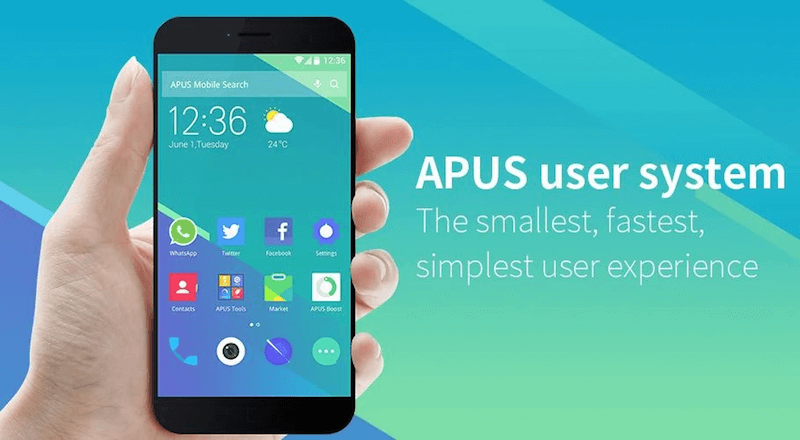
The APUS Launcher for Android has been installed more than 210,000,000 times and is one of the most popular and featured packed launchers on the market. Features such as easily accessible Boost button enables you to clear up the memory of your phone on the fly, without having to exit/enter programs consistently. Optimized mobile search allows you to search the web and phone memory in a new and exciting way.
2. dodol Launcher
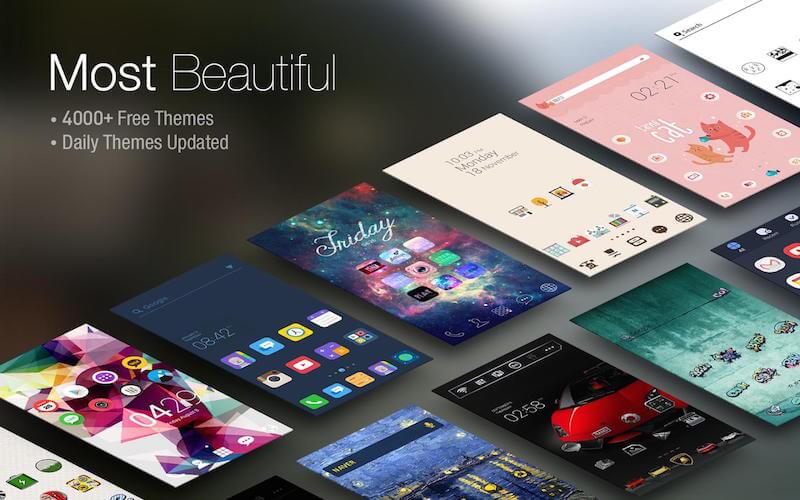
Dodol stands out with the fact that you have the option to choose from several thousand different custom and tailored theme styles that will change the appearance of your Android device forever. Customers are always one-upping the team behind Dodol for allowing users to customize their launcher however they see fit.
3. EverythingMe Launcher
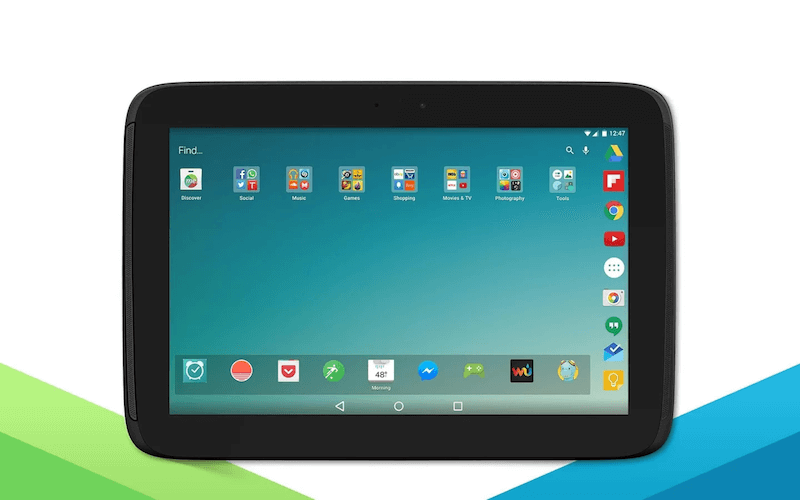
EverythingMe has worked hard to bring about a truly contextual launcher that is both intuitive and easy to use, this also means that you no longer will have to spend countless minutes trying to find the best apps, as the in-built contextual search is going to help you with finding the best results automatically. It’s also acclaimed for having one of the fastest search implementations.
4. Hola Launcher
Hola is a lightweight, modern and sleek launcher that will give you all the necessary Android features at your disposal, without causing any extra user experience problems. A featured called Intercept will create a friendly prompt every time you try to move shortcuts around your desktop area, keeping it clean and clutter-free.
5. Nova Launcher
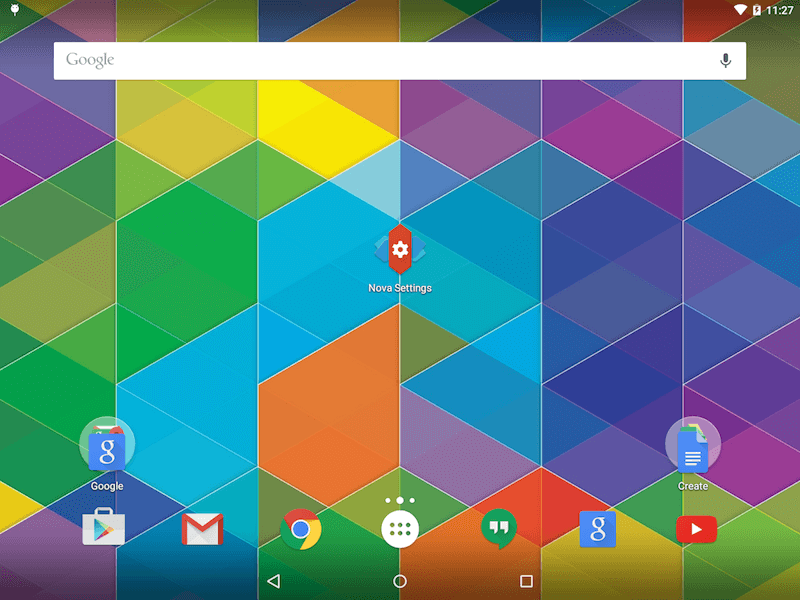
Nova Launcher stands out with the fact that it’s both flexible and smooth in one nice combination. There are a ton of Icon Themes available for download, which will give you even more room for improvement. Needless to say that Nova has fully embraced the appeal of Material Design, something that we hope others will follow along.
6. Smart Launcher
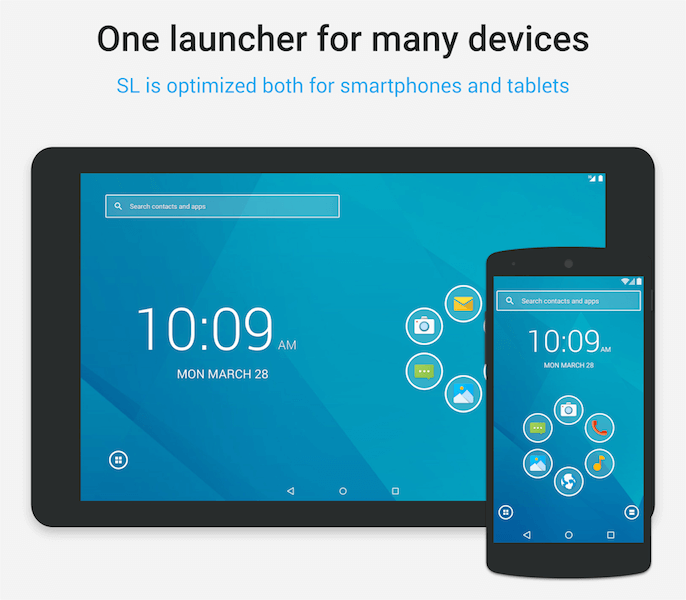
Speed up your device with Smart Launcher 3. The innovative launcher that makes your Android more intuitive and well organized. Find out why it has been downloaded by over 20 million people. Smart Launcher 3 is completely different from any other launcher on Play Store. It’s not based on the AOSP launcher. Lots of positive feedback from the Android gaming community for this launcher.
7. Solo Launcher
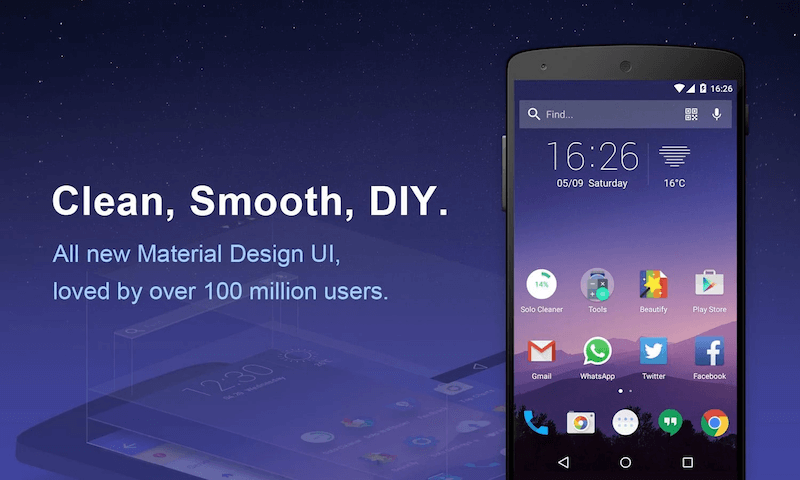
Solo Launcher has also embraced the endless possibilities of good design choices that Material Design provides, and their launcher design clearly displays the vast array of creativity. According to the Solo developers, their launcher is known to be one of the fastest and most reliable when it comes to clearing cache, boosting performance, and clearing storage space.
There’s a library of thousands of themes, wallpapers, and widgets to choose from to make your Android smartphone look beautiful, and be quick at the same time.
How to backup WhatsApp photo? My phone is malfunctioning and I don’t want to lose my WhatsApp data. Can someone help me take a backup of my WhatsApp chats and attachments?
If you are a regular user of WhatsApp then you must be having a similar thought. Since WhatsApp can have our important personal chats or work conversations, it is always recommended to maintain its backup. Now, you can easily do WhatsApp backup iPhone or Android and that too in different ways. In this guide, I have handpicked the 5 best solutions to backup WhatsApp data.
I. One-click Solution to backup WhatsApp Data on iPhone
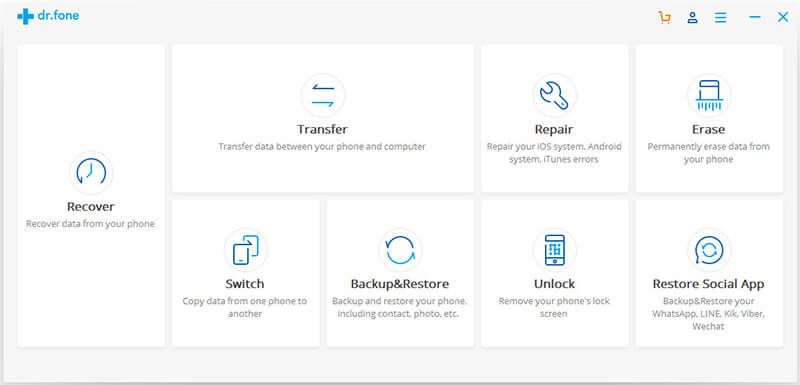
One of the best ways to backup and restore WhatsApp data is by using dr.fone – Restore Social App (iOS). It is a part of the dr.fone toolkit and provides a quick one-click solution to backup WhatsApp chats and attachments. This means, you can backup WhatsApp photo and videos directly to your device. Later, you can even preview the backup content and restore it to your phone.
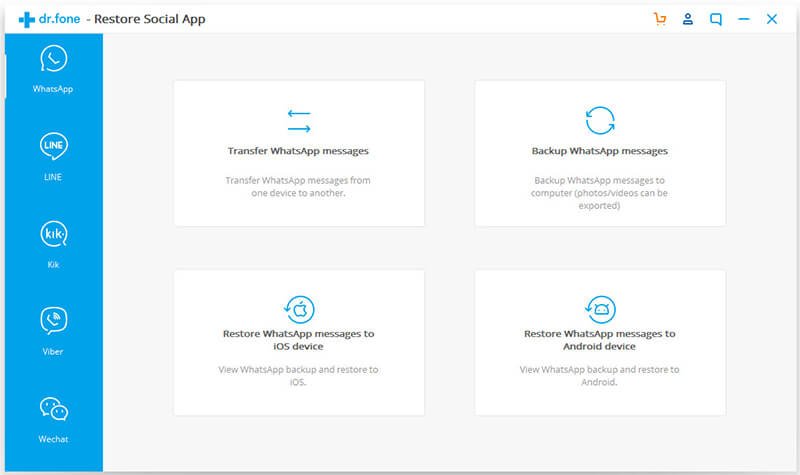
Apart from that, it can also transfer WhatsApp data directly or restore iPhone WhatsApp data to an iOS/Android device. It can also be used to backup and restore other social apps like Kik, Line, WeChat, and Viber. To perform WhatsApp backup iPhone using dr.fone, simply follow these steps:
1. Launch the dr.fone toolkit and pick the Restore Social App feature from its home. Also, connect your iPhone to the system using an authentic cable.
2. Go to the WhatsApp tab from the left and choose to backup your WhatsApp data.
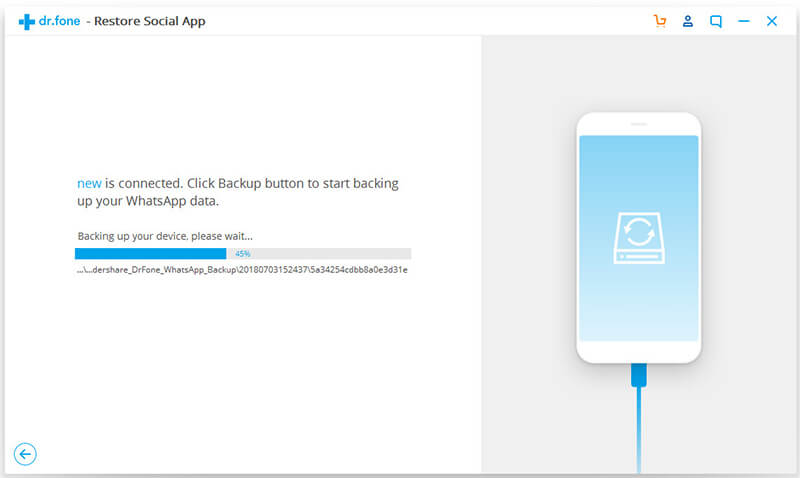
3. The application will automatically start taking a backup of your data. Simply wait for a while for the backup process to be completed.
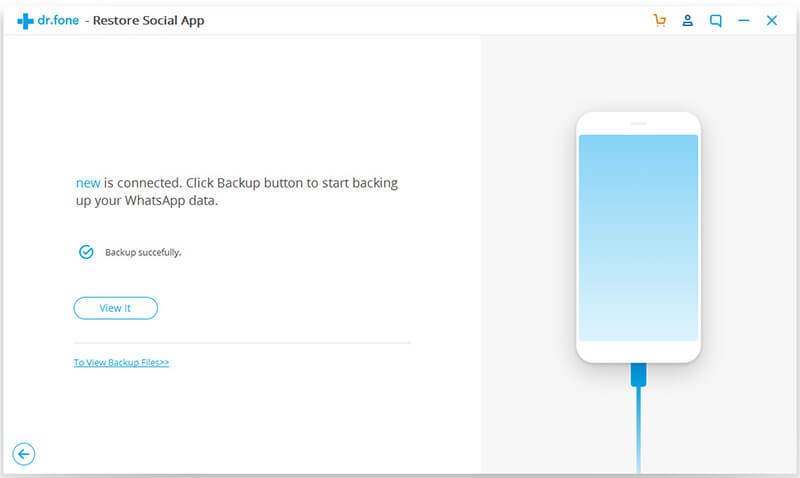
4. As soon as it is successfully completed, you will be notified. To check it, click on the “View it” button.
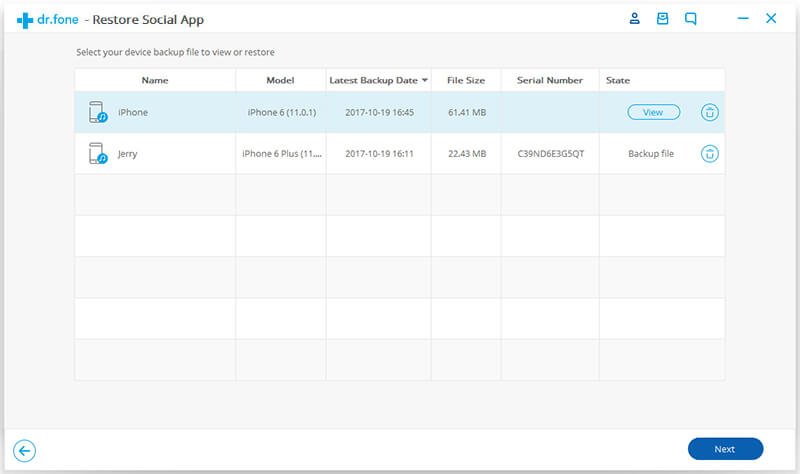
5. The interface will display the saved backup files with their details. You can simply view the backup of your choice.
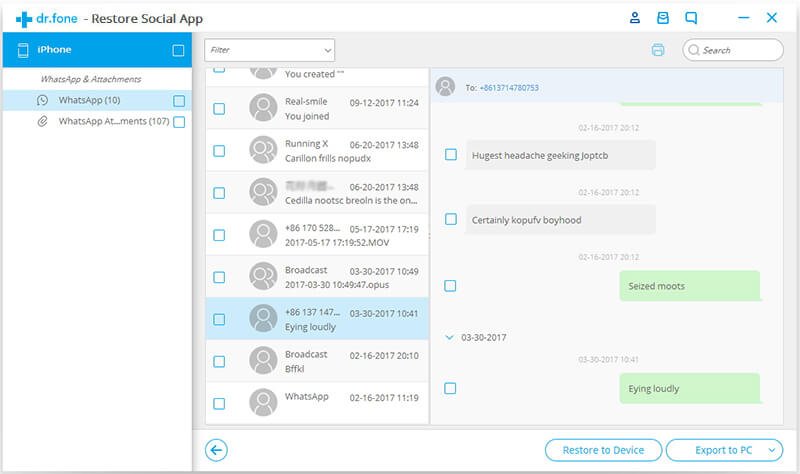
6. As you can see, all the chats and saved media files will be displayed on the interface for you to preview. If you want, you can directly restore WhatsApp data from here as well.
In this way, you can easily backup and restore your WhatsApp chats with a single click and always keep your data safe.
II. Backup iPhone WhatsApp Data to iCloud
This is a native solution that is provided by WhatsApp on iOS devices. If you have enough free space on your iCloud account, then you can easily take a backup of your WhatsApp chats on it. Though, the process to restore WhatsApp chats might not be as seamless as dr.fone – Restore Social App.
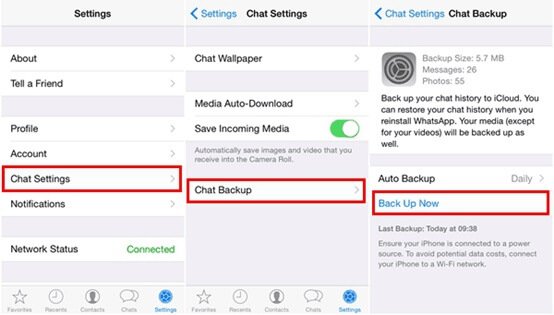
Unlock your device and launch WhatsApp. Go to its Settings by tapping on the menu icon. Visit Chat Settings and tap on the “Chat Backup” button.
Manually take the backup of WhatsApp data or turn on the automatic backup option. You can also choose if you wish to backup videos or not.
In this way, a backup of your WhatsApp data would be maintained on iCloud. Later, you can restore the backup by installing WhatsApp on the same device and signing up with the same phone number.
III. Maintain an Offline Backup with iTunes
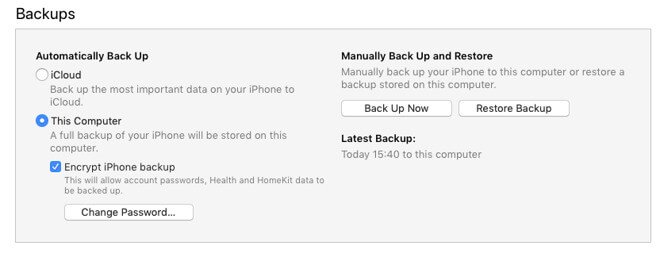
If you want to maintain an offline backup of your WhatsApp chats, then you can take the assistance of iTunes as well. This will take an extensive backup of your iPhone. That is, besides WhatsApp backup iPhone, your device’s photos, videos, contacts, messages, etc. would also be saved. Connect your iPhone to the system and launch iTunes on it. Select the connected device and go to its Summary tab. Under the Backups section, you can find an option to take a backup of the device on iCloud or the local system (This Computer). Select the “This Computer” option. Now, click on the “Backup Now” button and confirm your choice to take an extensive backup of your device.
While it is easy to backup WhatsApp photo and other types of data this way, you would face unwanted problems restoring the data. A third-party iOS backup extractor would be needed to fetch the WhatsApp chats and restore them to the target device.
IV. Take a Backup of WhatsApp on Google Drive (Android Devices)
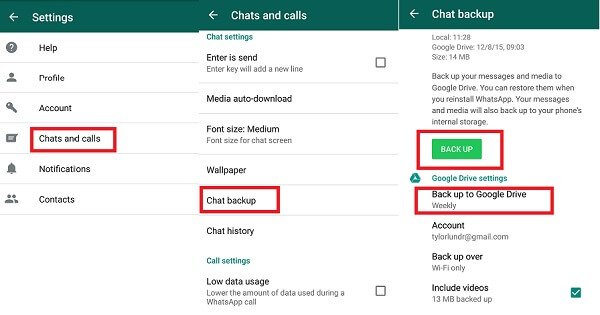
After learning some solutions to take a backup of WhatsApp data on iPhone, let’s consider the same for Android devices as well. Since all the Android phones are connected to a Google account, you can easily maintain WhatsApp backup on Google Drive. Here’s how you can do it. Launch WhatsApp on your Android phone and go to its Settings > Chats. In some versions, it is listed as “Chats and Calls”.
Tap on the “Chat Backup” button to explore the option. To take an immediate backup, tap on the “Backup Now” button. You can tap on the “Backup to Google Drive” option to link your WhatsApp to your Google account and take its backup on the Drive.
After maintaining a backup on Google Drive, you can restore it to an Android device. While setting up your WhatsApp account, enter the same number and WhatsApp will automatically detect the existing backup file.
V. Maintaining a Backup on the Android Device Storage
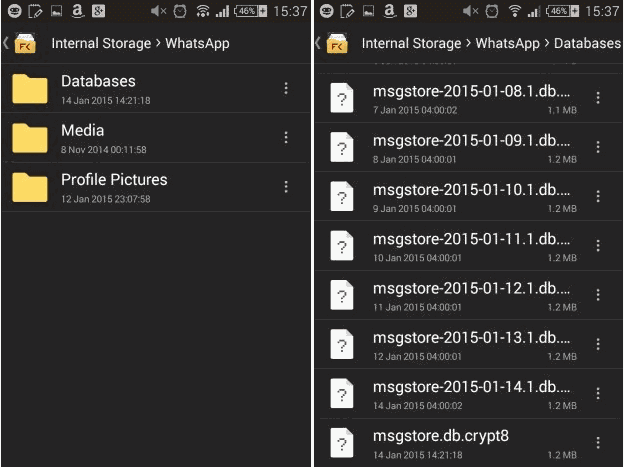
A lot of people don’t know, but you can also maintain a backup of your WhatsApp chats on the local device storage as well. The feature is only available for Android devices. When you visit the Chat Backup option on WhatsApp and take a backup on Google Drive, a duplicate copy is also maintained on the local device storage.
You can use a file manager and go to the Internal Storage > WhatsApp > Database folder. Here, you can view backup files with a .db extension. Simply copy the backup file and keep it safe at a secure location.
Now when you know five different ways to backup WhatsApp photos, videos, and chats, you can easily keep your data safe. Once the backup is maintained, you can use dr.fone – Restore Social App (iOS) to recover it as well. It is a complete solution to backup, transfer, and restore WhatsApp data that will certainly come handy to you on different occasions.
Software development is an interesting theme. There’s a significant amount of fragmentation of devices and Operating Systems (OSs) with the three leading mobile platforms including; iOS for Apple, Android for Google, and Windows for Microsoft fighting for the best spot in the industry.
As to which of the three is the current best is a discussion for another day. Today, however, we’ll take a tattletale preview of the other current best, the top 10 best android blogs you can follow to catch up with the latest software’s, mobile apps, and alternative tech-related topics in the industry. Check out the following:
It’s certainly top of the top 10 best android blogs to follow. This is the professional web page for Android software development engineers. It provides credentials of software developers, Android studio and SDK. It’s also rich in-app tools, training, app code samples and much more.
The site is also helpful to individual developers as it allows them an opportunity to sell their apps to other people. But in order to acquire this service, you may have to register and pay $25 in fees.
Other than the official web page, Android App developers have a separate youtube channel with videos often posted live from Android events, App launches, Demos, and Tutorials. The channel has also been airing high-quality inspirational stories from companies such as Hunt and Haystack Besides the official web page and YouTube channel, the developers also run a twitter account for both the developers and Android users to meet, interact, learn and share in their best experiences.
If you’re into software development, unlike in the above two, you will find an entire source code available here. This blog offers the data you need to create personal variants of the Android stack and the Intel you need to port other accessories to your Android device as well as how-to guides. The software stack is a project led by Google. The open-source code also allows you free access to Android security advisories and a chance to ensure your devices meet standard compatibility requirements. That’s on top of the opportunity to restructure your own device’s security settings.
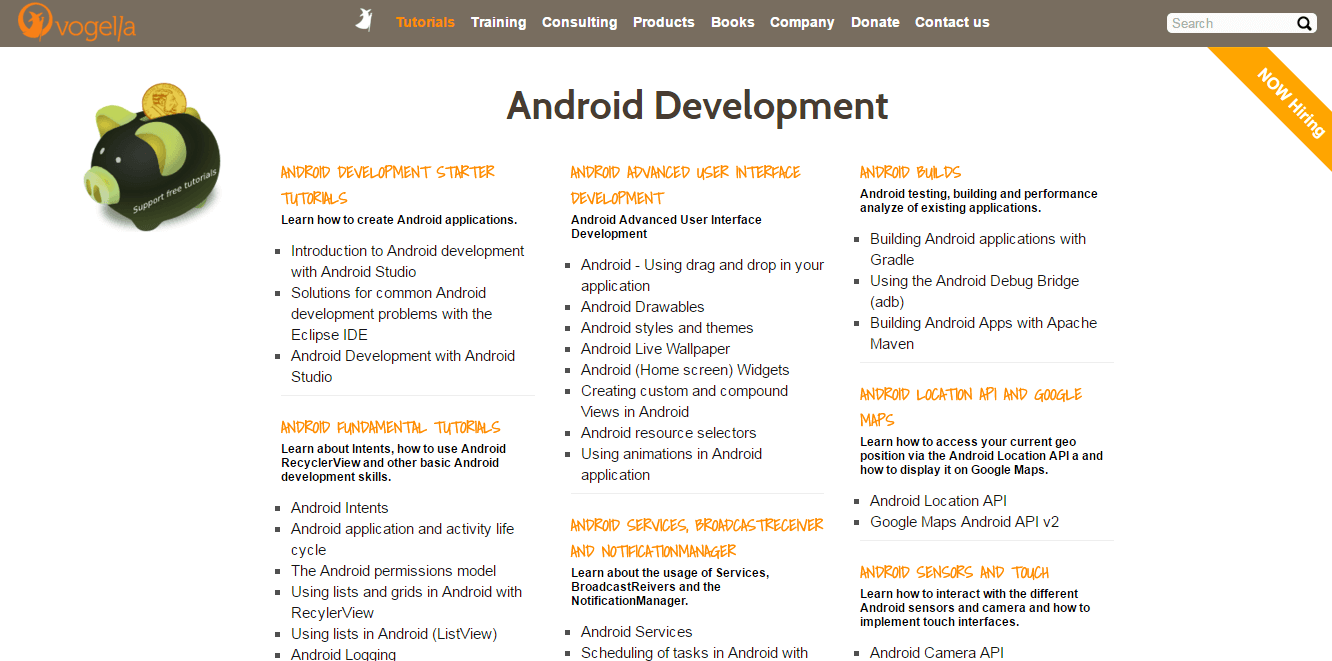
You’ll probably find Vogella the most comprehensive of the top 10 best android blogs. This one covers everything Android; from programming tutorials, Android software, Debugging, Google Maps such as Android API and other mobile apps as well as how to guides among other services.
If you’re just learning how to develop an app, vogella has not only the right training program for you but also the right supporting materials such as Git development and implementation support. And what’s more? You can as well store and access your data using the SQLite database system.
Like Vogella, Android Guys covers everything Android. It’s the place to be when looking for a comprehensive package in software development, news, reviews, interviews, podcasts, insights, and apps. They even have an accessories store for Android software and brand mobile devices. And also there's always a step ahead of the rest with top rumors on trends and unreleased apps and devices.
From the name you can tell this is about a family. Or so a couple of families brought together. In this blog, Android developers, customers, tech enthusiasts, and other professionals come together to share in their Android experiences. The blog works closely with Google to get the latest news.
Beyond the news, Android Community is also popular for its comparative product reviews, apps, games, phones, tablets, and software sales as well as a collection of the best deals of the same at a particular time period in the market.
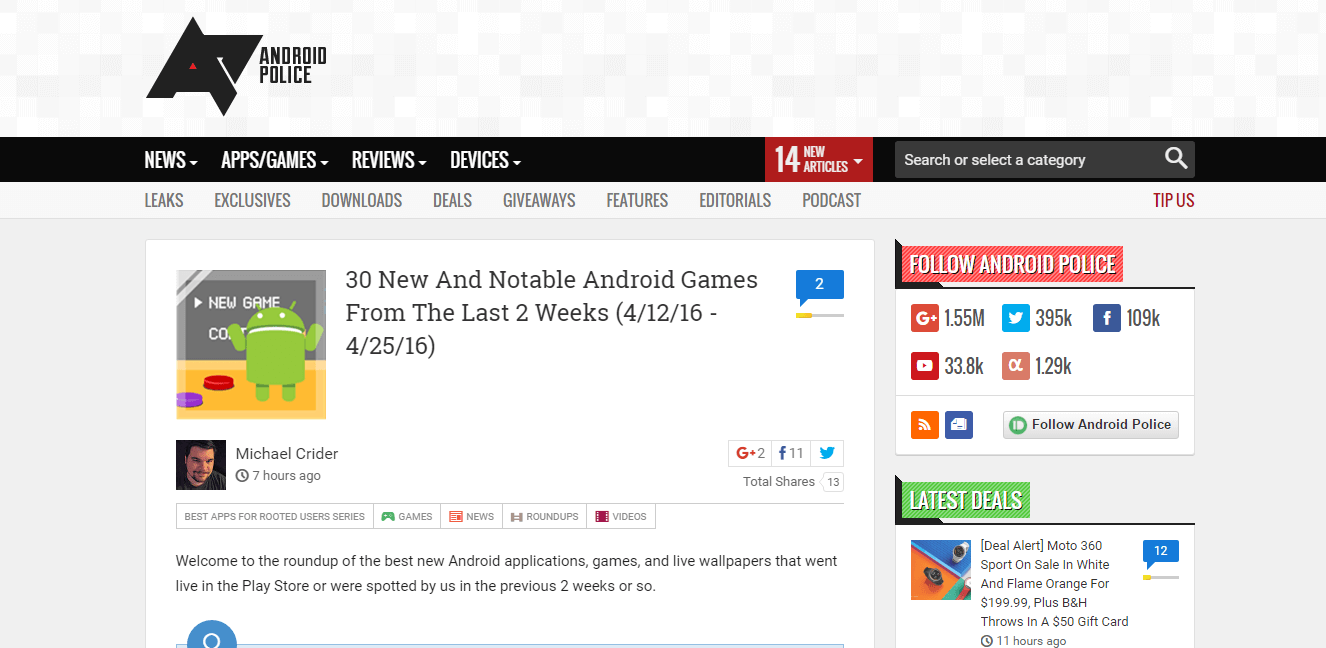
With the many Android contract links, contests, and winners’ giveaways Android Police most certainly merits the top 10 best android blogs in 2016. You wouldn’t be so kind if it missed or would you? Guess not! Other than the giveaways, the blog is also phenomenal with important leaks on essential Android products; software, smartphones, tablets, and TV plus mobile apps.
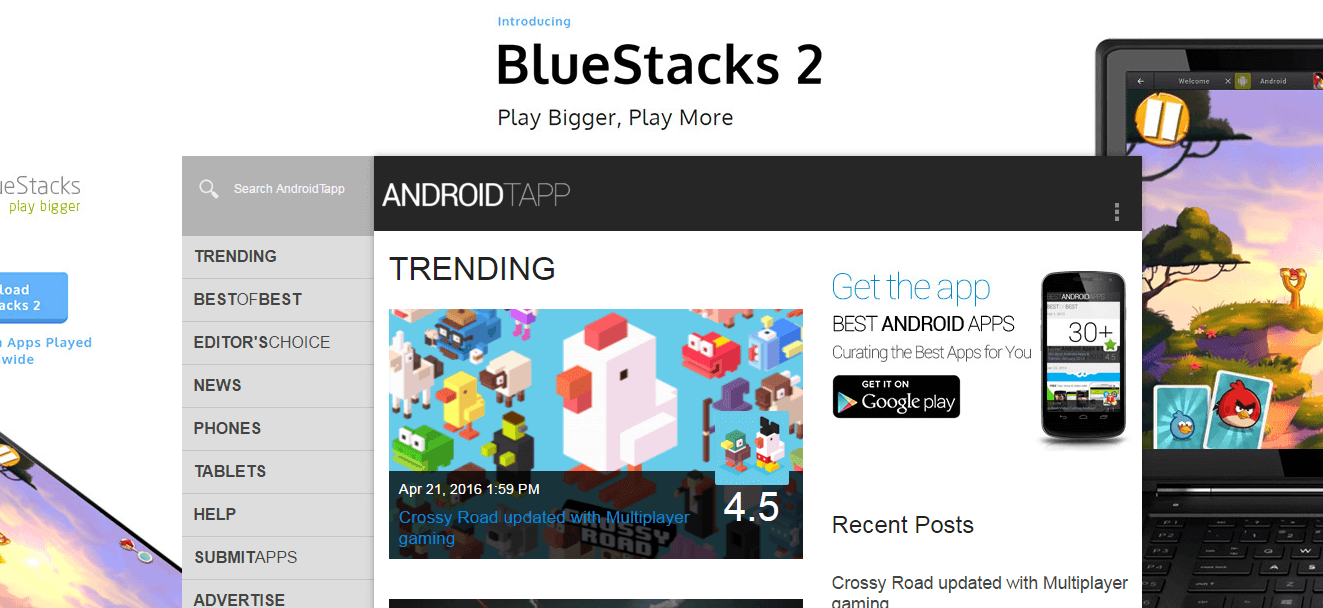
This one is very engaging. Other than the usual; apps, news, and review segments, AndroidTapp also runs socially engaging pieces including HD games, racing games, and brain teasers for kids. That aside, you can also count on the blog to get you up to date with trending topics on Android services and products.
You’ll find something new to learn about software development every time you visit Fragmented Podcast. Donn Felker and Kaushik Gopal often engage other Android developers on the same on a biweekly basis.
The topics range from Android tools to patterns, practices, apps, and creativity For instance, last week on Monday, Felker, and Gopal shone the bright light on vector drawables; how to use the same today in Android development, the recommended usage and formats, merits and demerits of using the same among other essentials of the technique in software development.
Of the top 10 best android blogs, this is the largest code host with more than 22.7m code sources. In their own words; the blog helps individuals create personal projects, try out new programming languages, and also host their earlier projects. The blog also helps businesses by supporting their development processes as well as by providing the platform to securely make up their software.
Also, if you want to collaborate with other developers in handling payable projects, just click on the link below for interesting programming gigs.
Besides this list of top 10 best Android blogs, you can also find everything Android by following the following experts, namely: Paul Buirke, Cyril Mottier, Taylor Ling, Roman Nurik and others.
Reached a creative impasse? Shift gears and get a different perspective with these great Android apps.
We’ve all suffered creative block, where you just can’t work out how to move forward on a project. The normal course of action is to take a break: go for a walk, take the car out for a spin, phone your parents, watch an episode or 10 of Game of Thrones… then come back to the task later with a refreshed mind and new sense of energy.
Sometimes, though, that doesn’t work. Sometimes it’s not just a question of giving your brain a rest, but finding new ways to get those creative muscles pumping again; like switching machines at the gym.
These 8 quirky apps offer a way to do just that. We’d love to hear if you’ve used any of them yourself, and what you think of them: please let us know in the comments below!
Another Google app, Tilt Brush offers a way to intuitively create art in a VR environment, this time using HTC's Vive headset and hand controllers. As the company explains, “Tilt Brush lets you paint in 3D space with virtual reality. Your room is your canvas. Your palette is your imagination. The possibilities are endless.” In short, Tilt Brush offers a great way to experimenting with your creativity and just see where it takes you. It’s available on Steam for £22.99
Taking pictures with your smartphone camera when you’re out and about can be a great way to gather fresh creative inspiration. But it’s very easy to fall into the habit of photographing the same kind of things over and over again.
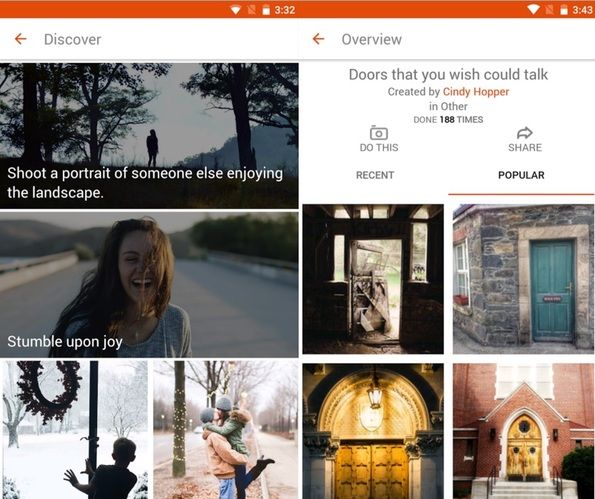
OKDOTHIS harnesses the power of its social community to get you out of that rut, by providing a ‘DO’; a specific idea of what subject to shoot and what mood, topic, theme or attribute to highlight.
Examples of thought-provoking DOs include: ‘Doors that you wish could talk’; ‘Epitomize a city in one photograph’; ‘Capture a part of your life that isn't glamorous... but make it look glamorous’ and ‘Photograph a reflection and share it upside down’. It’s a great way to get new sense of visual perspective, and the app is completely free.
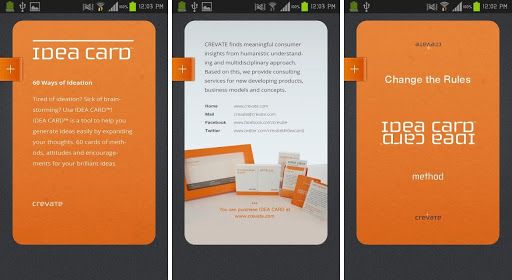
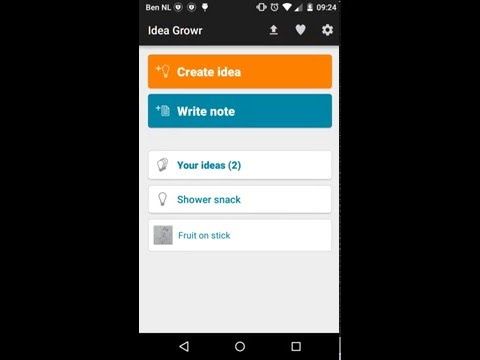
Idea Card aims to help you generate new and creative ideas, quickly and easily, via a series of 60 inspirational flashcards. Shake your phone and a random card appears to jolt your thinking and provide a new perspective.
The concepts themselves are not revolutionary, but they all come with accompanying text aimed at really getting you to think outside the box. All in all, it’s a simple idea but well executed and certainly worth giving a go, especially considering that it’s free. If it doesn’t work for you, we’d also suggest trying the browser-based app 75 Tools.
Another great way to power up your creative brain is to playing a drawing game, and Impossible Draw is one of our firm favourites. An addictive game that will keep you drawing for hours, it’s set in a futuristic 3D world where you have to draw a series of symbols accurately in order to travel through an ever-expanding space.
You can customize your trips with various game modes, special effects and soundtracks to make every trip a unique drawing experience. There are in-app purchases on offer, but the free version kept us occupied happily for hours.
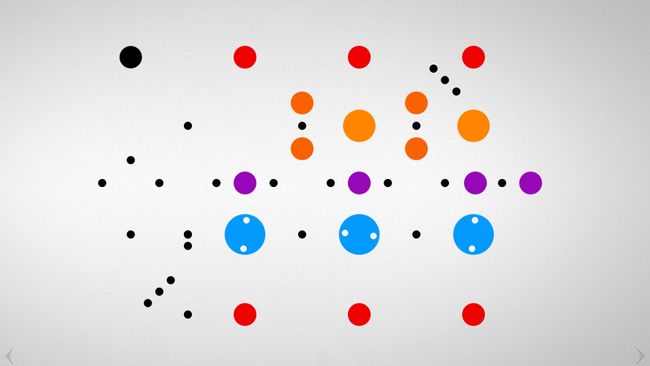
Halfway between a game and a doodling experience, Blek is much easier to use than it is to describe. Described on the site as “an open-ended experience with singular game mechanics and deep, Bauhaus-informed design”, it’s essentially a way of creating what looks like modern art without realising you’re doing so.
The goal is to shape a line that collects all coloured circles, avoiding black holes on its route. But unlike other games, it’s not about learning the “right” moves, as countless solutions exist; it’s more about letting your imagination roam free, and seeing what happens. Blek is available to download from the Google Play Store for £2.49.
Do you have great ideas, but then forget them if you don’t write them down instantly? This intuitive app helps you get down your ideas quickly and easily, even when you’re busy doing other things.
As well as writing ideas and notes, you can upload pictures and record your voice, and share your ideas via apps like Dropbox and Google Drive. It may be a simple idea but it all works seamlessly, it’s free and there are no pesky in-app purchases.
Mobile now accounts for over half the web's traffic, and web applications enable users to do things in the browser that rival native apps, but there's a problem: the quality of connections and devices varies massively all over the world.
Catering both to users on lightning-fast connections in Seoul, and users in rural India on an outdated phone, is the latest usability challenge, and Progressive Web Apps are the solution.
PWAs use progressive enhancement to load the most important content first, then add presentational and functional extras as required, meaning that all your users get the same core experience as quickly as possible. If you want to reach the widest possible audience, PWAs are the way to go.
Though Progressive Web Apps bring a lot of benefits and functionality to the web, they don't require rewriting your entire application. Any app can be converted to a PWA by adding a few extra layers to it.
For best results, you'll want to put a strong emphasis on performance from the beginning – but that's true of any web app. Here, we'll walk through the steps to make your app progressive.
01. Serve over HTTPS
Let's be honest: you should be doing this anyway. SSL adds an extra layer of security to the web, helping your users feel secure in using your site. With PWAs, HTTPS is essential for using service workers and allowing home screen installation. You can purchase an SSL certificate from your domain registrar at little expense and then configure it through your hosting service.
02. Create an application shell
Your app shell is the first thing that loads – the first thing the user sees. It should be exist entirely in your index HTML document, with inline CSS, to ensure it appears as fast as possible and your user isn't staring at a white screen for longer than necessary. The application shell forms part of the pattern of progressive enhancement. Your app should give the user content as soon as possible, and then progressively enhance it as more data (likely JavaScript) loads.
The example below is taken from a React.js application. The user is presented with an outline of the app and a loading indicator in the index.html. Then, once the JavaScript loads and React boots up, the full application is rendered within the shell.
To tap into the full spectrum of PWA goodies (push notifications, caching, install prompts) you will need a service worker. Luckily, they're pretty easy to set up. Below, we first check if the user's browser supports service workers.
Then, if so, we can move ahead with registering the service worker file, here called service‑worker.js. Note that you don't need anything special inside that file at this point – it can be blank. In the example below, however, we show how to tap into the three key service worker lifecycle events.
These are 'install', when the user first visits your page; 'activate', right before registration completes; and 'fetch', when the application makes a network request. The last one is relevant for caching and offline capability.
Service workers allow your users to receive push notifications via the web Push API. To access it, you can tap into self.registration.pushManager from within your service worker file. Since the sending of push notifications relies heavily on your backend setup, we won't dive into it here.
If you're starting an app from scratch, Google's Firebase service comes with Firebase Cloud Messaging for relatively painless push notifications. The code below shows how to register for push notifications via the Push API.
navigator.serviceWorker.ready.then(function(registration){if(!registration.pushManager){alert('No push notifications support.');returnfalse;}//To subscribe `push notification` from push manager
registration.pushManager.subscribe({
userVisibleOnly:true//Always show notification when received}).then(function(subscription){
console.log('Subscribed.');}).catch(function(error){
console.log('Subscription error: ', error);});})
05. Add a web app manifest
In order to make your application installable, you need to include a manifest.json in the application's root directory. You can think of this as a description of your application, similar to what you might submit to the App Store. It includes icons, a splash screen, a name and a description.
There's also some configuration for how your application appears when it is launched from the user's home screen: Do you want to show the address bar in the browser or not? What colour do you want the status bar to be? And so on. Note that a proper manifest.json should include a full spectrum of icon sizes for various devices. The code below is a preview of some of the properties your manifest can include.
When a user visits a PWA with a service worker and manifest, Chrome will automatically prompt them to install it to their homescreen, given the following: the user must visit the site twice, with five minutes between visits.
The idea here is to wait until the user demonstrates interest in your application, and then ask them to make it a fixture of their device (this is in sharp contrast to the native app approach, which asks for that investment up-front).
But there may be cases where you want to show the install prompt in different situations, such as after the user takes a particular usefull action. To do so, we intercept the before install prompt event and save it for later, then deploy the prompt when we see fit.
window.addEventListener('beforeinstallprompt', e =>{
console.log('beforeinstallprompt Event fired');
e.preventDefault();// Stash the event so it can be triggered later.this.deferredPrompt = e;returnfalse;});// When you want to trigger prompt:this.deferredPrompt.prompt();this.deferredPrompt.userChoice.then(choice =>{
console.log(choice);});this.deferredPrompt =null;
07. Analyze your app's performance
Performance is the heart and soul of PWAs. Your app should be fast for users on all network conditions. Caching and offline capability helps a lot, but at the end of the day, your application should be speedy even if the user does not have the browser to support service worker technology. This is the definition of progressive enhancement – provide a great experience for everyone, regardless of device modernity or network conditions.
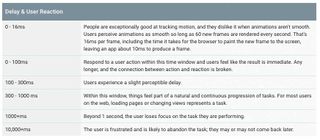
To do so, a useful set of metrics is the RAIL system. RAIL is what Google calls a 'user-centric performance model' – a set of guidelines for measuring our app's performance.
The acronym stands for Response (how long it takes for your app to respond to user actions), Animation (keeping animation speed at 60fps), Idle (using time when your app isn't doing anything else to load and cache additional assets) and Load (loading your app in one second or less).
Here is a table of meaningful benchmarks for application loading, as supplied by Meggin Kearney, the tech writer at Google Web Fundamentals.
08. Audit your app with Lighthouse
Google is the biggest champion pushing Progressive Web Apps as the future of the web. As such, it has supplied a useful tool for guiding your PWA development.
Formerly called Lighthouse and supplied as a Chrome Extension, as of Chrome 60 it's a part of the Chrome DevTools, under the 'Audits' tab. What Lighthouse does is run your application under different conditions and measure its response and success according to PWA guidelines. It then gives you a score out of 100. It can also score your app on web best practices at the same time.
The following text is a list of the values Lighthouse measured. In use also shows descriptions.
Registers a Service Worker
Responds with a 200 when offline
Contains some content when JavaScript is not available
Uses HTTPS
Redirects HTTP traffic to HTTPS
Page load is fast enough on 3G
User can be prompted to install the Web App
Configured for a custom splash screen
Address bar matches brand colors
Has a <meta name="viewport"> tag with width or initial-scale